Bee with Flora Design Review
First Impression: Friendly, Handmade, and Brand-Ready
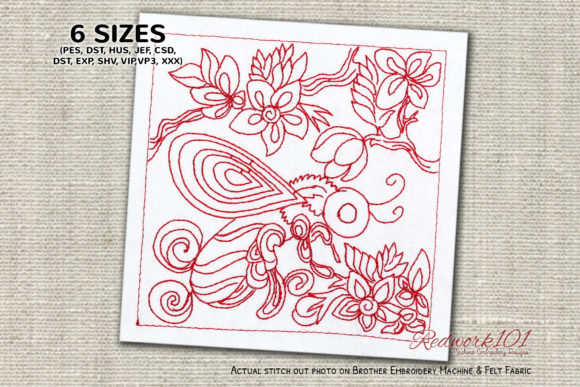
As an embroidery designer who’s developed hundreds of commercial designs for small businesses, my first read on Bee with Flora Design is positive — it signals warmth, natural charm, and approachable craftsmanship. The title alone evokes a story: pollination, growth, local care — perfect for cafés, florists, bakeries, pet brands, or eco-conscious boutiques. It reads less like generic “bug” clipart and more like intentional brand storytelling. In the Bugs category, this stands out for its balance of illustrative detail and embroidery-friendly structure — not overly fussy, yet expressive enough to hold visual weight on apparel and patches.
Real-World Performance Across Small Business Merch
Bee with Flora Design excels where many nature-themed embroidery files falter: versatility across substrates and scales. As an embroidered patch, it holds clarity at 2.5"–3.5" width — ideal for sew-on branding on tote bags, aprons, or denim jackets. On staff uniforms, it reads cleanly on chest placement (left or right) without overwhelming the garment. For cap embroidery, it works best on structured front panels — avoid low-profile curved crowns unless digitized with contour compensation. On cotton totes or linen tea towels, the design adds artisanal credibility without looking cluttered.
For handmade product labels — think jar stickers, soap tags, or gift box accents — Bee with Flora Design pairs beautifully with minimalist typography in a printable mockup. Etsy sellers report stronger buyer engagement when using it as a sleeve detail on organic cotton tees or as a subtle back-neck accent on baby onesies. It also translates well into custom apparel bundles: match it with coordinating thread colors across aprons, caps, and staff lanyards to reinforce visual consistency.
Where to Use It Thoughtfully — Not Everywhere
Like any machine embroidery design, Bee with Flora Design has boundaries. Avoid scaling it below 1.75" for embroidered patches — fine flora outlines and bee wing details risk stitch merging or loss of definition. On dark uniforms (navy, charcoal, black), confirm thread color contrast: light golds or muted yellows may disappear without testing. Curved surfaces — like baseball cap bills or rounded ceramic mugs with embroidered fabric sleeves — require careful hooping and stabilizer selection to prevent puckering.
High stitch density areas (e.g., clustered floral centers or layered bee wings) demand proper underlay and appropriate stabilizer — cutaway for knits, tear-away for stable wovens. If your fabric has heavy texture (burlap, thick canvas, or quilted linens), test first: dense fill stitches can flatten or distort surface grain. And remember — the optional Box Stitch referenced in the description? It’s a smart visual anchor, but only use it if it supports your brand identity. Skip it for minimalist brands; embrace it for vintage or apothecary-style presentation.
How It Strengthens Brand Identity and Customer Trust
Small business owners often underestimate how much a single embroidered patch shapes perception. Bee with Flora Design subtly communicates care, authenticity, and attention to detail — traits customers associate with handmade product and local service. When stitched onto café aprons or florist delivery totes, it doesn’t just label — it reassures. That consistency across touchpoints (uniforms → packaging → event merch) builds recognition faster than logos alone. Customers remember the bee that feels alive, not the vector graphic that looks copied.
It also elevates perceived product value. A $28 tote bag with Bee with Flora Design stitched cleanly along the hem reads premium versus screen-printed alternatives. For crafters and digital embroidery file buyers, pairing it with cohesive design assets — like matching border motifs or monogram variants — creates scalable branding systems without custom illustration costs.
Practical Embroidery Designer Notes for Commercial Use
Before committing to production, follow these steps:
- Test in black and white first — assess silhouette strength and negative space balance without color distraction.
- Check small patch size performance — resize to your most common patch dimension (e.g., 2") and verify legibility of key features: bee antennae, petal separation, stem flow.
- Review thread color contrast — especially on dark or textured fabrics. A warm honey-gold thread pops on navy; sage green reads cleanly on cream linen.
- Inspect spacing and underlay — ensure no floating elements or tight corners that’ll snap thread during high-speed runs.
- Confirm hoop size compatibility — does it fit comfortably within your standard 4x4 or 5x7 hoop? Oversized versions may need re-hooping mid-stitch.
- Test on real fabric — run a sample on your actual uniform twill or tote canvas, not just stabilizer swatches.
- Use proper stabilizer — lightweight cutaway prevents shifting on stretchy or loosely woven materials.
- Create a client-facing printable mockup — show how Bee with Flora Design looks on their specific garment before stitching begins.
- Compare beside existing design assets — does it harmonize with your current logo, fonts, and color palette?
- Confirm commercial licensing — since this is intended for small business merch, custom apparel, and commercial embroidery, verify usage rights cover resale, distribution, and branded product labeling.
The Bee with Flora Design isn’t just another digital embroidery file. It’s a flexible, emotionally resonant asset — one that helps small businesses say “we’re thoughtful, we’re local, and we take pride in what we make.” Whether you’re stitching apron embroidery for a neighborhood bakery or creating cap embroidery for a sustainable pet brand, this design delivers professionalism with personality. Just remember: great embroidery starts with intention — not just thread count.